Breaking the Spell of the Wounded King
Making Sense of the Chaos #6

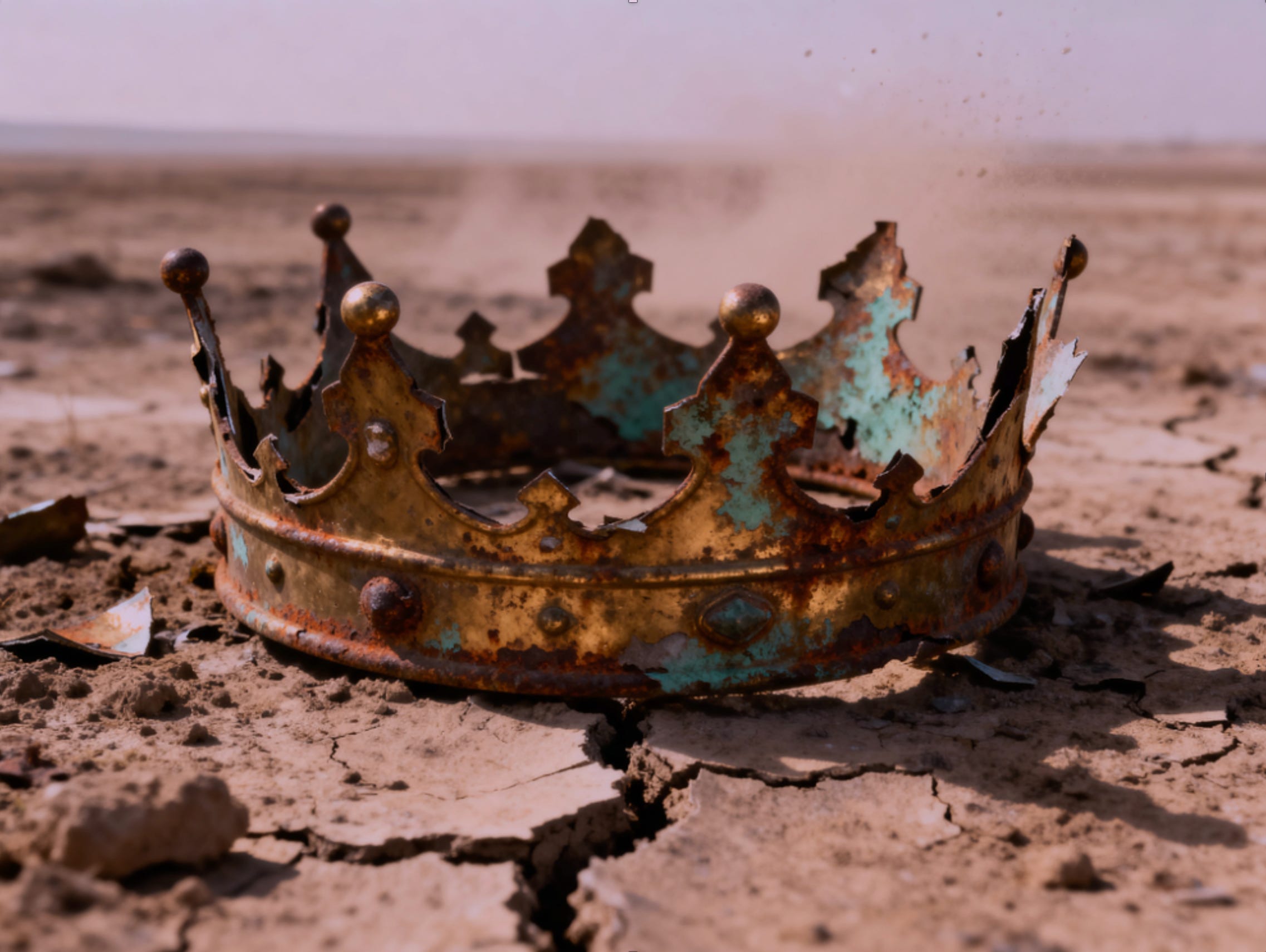
In Arthurian times, it was believed that the health of the king was directly correlated to the health of the land and its people. With a de facto king in power, what can we glean from the stories of ailing kings and the wasteland that surrounded them?
The most notable story of that time, about the quest for the Holy Grail, takes place at a time when the Goddess had been laid asunder, and the land had become barren. To break the spell of the wasteland and set things right again, King Arthur sends one of his best knights on a quest. The knight’s name was Percival, which means to “pierce the veil.”
Now Percival was a mother’s boy, who had been raised in the forest as a wild child, well versed in the ways of nature, but naïve about the affairs of men. When he was a teen and saw for the first time the knights riding by in all their shining armor, he was instantly enchanted, and knew he must follow them. His grieving mother, concerned he would appear stupid, gave him a piece of stern advice: “Whatever you do, don’t ask any questions!”
After a period of training in the court, Percival sets out upon his quest and finds his way to the castle of the Fisher King, deep in the forest. The king is wounded and cannot rise from his bed to greet his visitor, but Percival, being a good boy, refrains from asking what’s wrong. Nonetheless, he is invited to dine, whereupon he witnesses a strange procession of implements carried through the chamber: a bleeding lance, a shining sword, a silver platter, and the glowing, bejeweled Holy Grail.
This strange procession parades twice through the room, yet Percival again refrains from asking about its meaning. The disappointed king abruptly calls the feast to an end, and Percival is expelled from the castle and sent on his way.
Later, Percival learns that if he had simply asked the compassionate question of “What ails you?” the spell would have been instantly broken and both the land and the king would be healed. Had he asked the question about the parade of tools, he would have unlocked the magic of the four elements, necessary for healing and transformation. Had he asked about the Grail, he would have found the vessel of the Goddess
As a results of this failure, the horrible spell remains, and Percival spends the rest of his life searching for the Grail, so as to right his terrible wrong. The Grail has not been found to this day.

Is America Under a Spell?
As we witness the narcissistic flaws of a power-hungry, wannabe king, the illness of hatred is rapidly spreading across the land. Racism, sexism, lies, corruption, and hate speech have become commonplace, even lauded. Environmental protections are being dissolved, and climate change continues unabated. The Covid pandemic occurred during Trump’s first term and is going through a resurgence on his second watch.
As it is with the king, so it is with the land. If we don’t break the spell, the ailing king will render our land and our democracy barren.
The king is both the cause and the symbol of what ails the country. If we are to break this spell, we must ask the deeper questions of what ails us. These are the questions of compassion and concern. They look beneath the surface of what’s wrong to its underlying causes. They seek restoration on an archetypal level, balancing masculine with the feminine.
The implements in the procession represent the four tools of magic. The lance is the wand of power and represents the element fire. The sword represents air and the discerning intellect. The platter is the tool of earth and a symbol of abundance, and the Grail represents the tool for water and the vessel of the Goddess. At a time when worship of the Goddess had been mostly banished, it is no wonder the fertility of the land was laid barren.
It is significant that the lance is perpetually bleeding. War begets more war and hate begets hate. Those who advocate for gun rights just might find themselves the recipient of a bullet. Those who wage war cause generations of trauma that ricochet from one land to another.
The lust for power causes wounds that echo through every facet of society. The underlying wound is a powerlessness that mistakenly believes its healing is to climb that very same ladder of power and seize control. Yet that only perpetuates the problem.
We can shake our heads and cry out in dismay at the actions of the wounded king. But if we do not ask the deeper questions and change the hierarchical structure that allows this kind of absolute power to take place, we cannot break the spell and heal the land. Without a Goddess, we cannot achieve rebirth.
It is a return to a balance of the four elements, a reclamation of the vessel of the Goddess, and the questions of compassion that unlock the healing that will break this spell.
To go on a quest is to question. It is not the answer that is most important, but the questioning itself that brings the transformation.
The final question that unlocks the power of the Grail is: “Whom does the Grail serve?” And it is said that the Grail serves those who serve the Grail. If your grail is love, you will be served love. If your grail is hatred and power, you will be broken by that hatred and power. If you serve the Goddess, she will serve you in turn.
The choice lies within all of us. Organize by the love of power or the power of love. Which Grail do we serve, and which do we want to drink from?
*The essays in this series, Making Sense of the Chaos, seek to ask those deeper questions and look at the larger picture. Please share widely and subscribe if you are interested in more.
A brilliant analogy for our times. There is a sickness across our land, and a sick King at the helm. This myth teaches the deeper principles that lie beneath the reality we face everyday. Thank you for your brilliant analysis, and for pointing out that this is an ancient problem that civilizations have faced again and again. And the way out...