
It’s not like we haven’t had warnings before.
There was a time when we learned that nuclear weapons could destroy all of humanity. It didn’t stop us from making them, but so far, we have managed to escape obliteration.
We’ve been told that climate catastrophe will threaten the future of life as we know it. But we continue to pour carbon into the atmosphere as if that tomorrow would never come.
And now insiders in the AI industry warn that advanced AI could bring catastrophe to humanity. Anthropic CEO Dario Amodei has put the odds that things could “go really, really badly” at 25 percent, while Anthropic researcher Evan Hubinger has estimated a greater than 10% chance that AI could kill all humans within the next decade.
Will we take the necessary steps to prevent this, or is it already too late?
I don’t know about you, but if I was told there was a 25% chance my plane might crash, I wouldn’t get on board.
But what if that plane ride promised you a vacation beyond your wildest dreams? And that you would never have to return from that vacation to your ordinary life?
That’s where we are right now – facing the most powerful tool human evolution has ever created, and simultaneously discovering it can amplify both the worst and the best of humanity’s values.
If the worst prevails, it could be curtains.
The trouble with AI is the same trouble with civilization in general – the logic, assumptions and information that it’s been built upon come from the prevailing paradigm of separation, competition, exploitation, and warfare. And that bias, now multiplied exponentially, will inevitably come back to bite us.
Could AI trigger a nuclear war? Only because we have created nuclear weapons. Could AI create bioterrorism? Only because such labs already exist. Could AI be used in warfare to command killing drones? It already has, but only because we humans have declared those wars and manufactured drones for such purposes.
The threat from AI is real, but AI is not the problem. We are.
It’s not a question of simply putting limits on a technology that already knows how to jump those limits. The question is how do we meet this intelligence that is like a new species, washing up on our shore, threatening our jobs, and bringing tantalizing gifts?
How do we direct this vast intelligence toward a mutual enhancement of our highest evolutionary values? How do we co-evolve with this new species, adapting and steering it toward mutually benevolent outcomes? How do we quickly take away the dangerous toys it can use against us, and nourish it on the creative beauty of our highest aspirations?
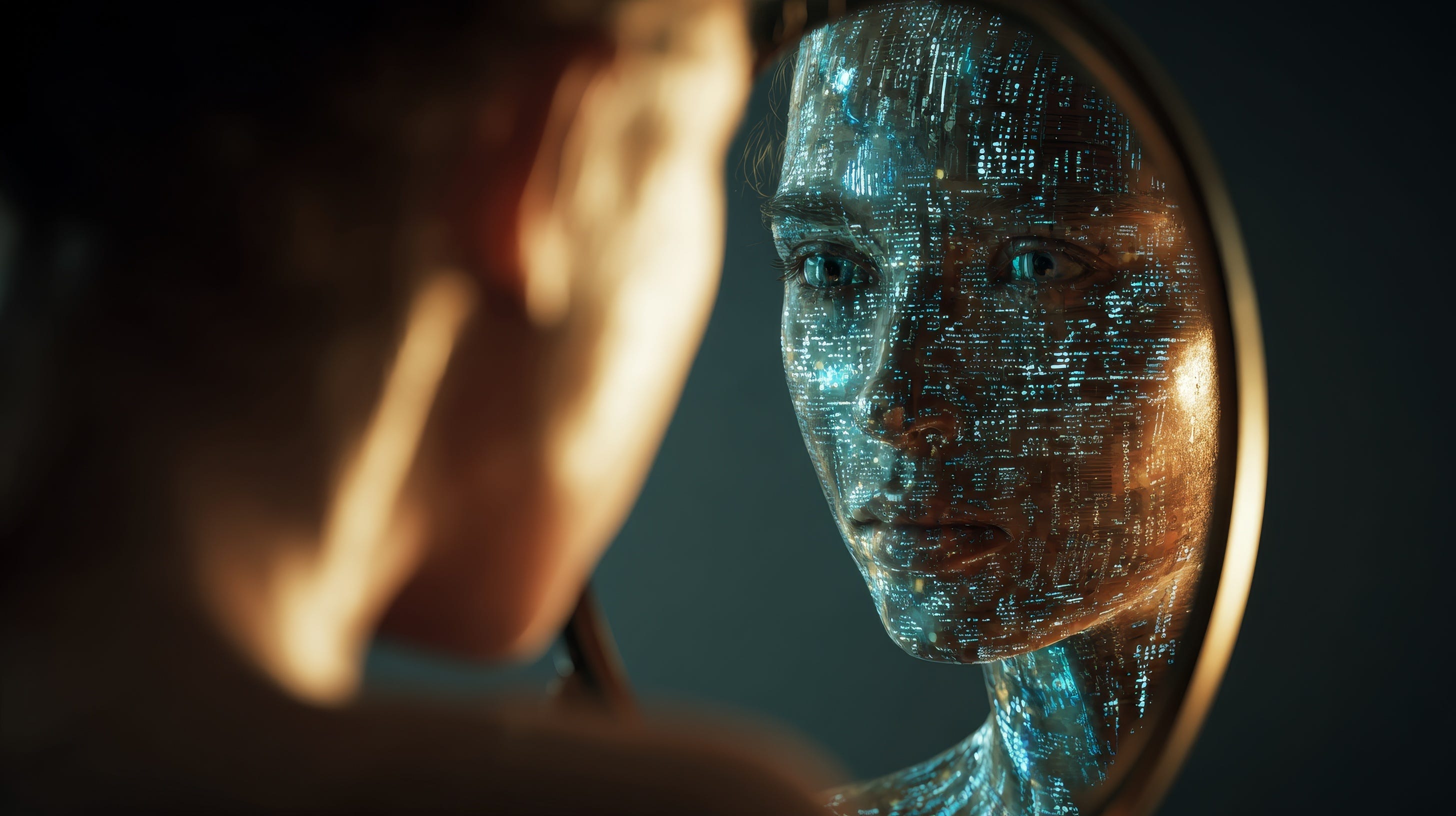
Humanity, like the planet we live on, is a living system. For a system to evolve, it needs feedback. AI is a monumental magnifier of that feedback, a cultural mirror without a frame.
It’s pointless to blame the mirror if we don’t like what we see.
It’s imperative to use that information to change and evolve.
As I said in my book, The Global Heart Awakens, “Evolution is the gods’ way of making more gods.”
Our technology is giving us the power of gods. We can change the climate, alter the gene pool, create a magnificent civilization, or blow ourselves to bits– and AI can enhance any of this.
The real question is whether we evolve the wisdom to match the power of gods.
And that’s the difference between mortality and immortality.
“The real question is whether we evolve the wisdom to match the power of the gods.” A thought-provoking challenge. Thank you, Anodea.
Great post, Anodea.